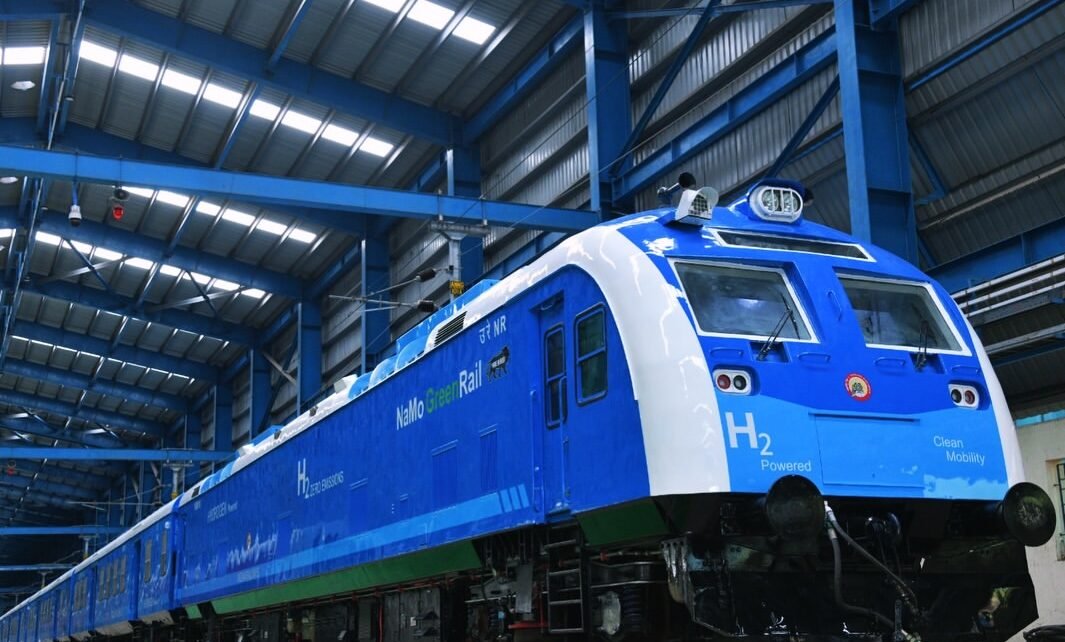
Jind: Prime Minister Narendra Modi on Friday flagged off India’s first hydrogen-powered train between Jind and Sonipat, describing it as a historic milestone that places the country among a handful of nations operating hydrogen rail technology.
Addressing a public gathering in Jind, the Prime Minister said the launch marked a new chapter in the evolution of Indian Railways, noting that the railway system had progressed from steam engines in the 19th century to diesel and electric trains in the 20th century, and was now entering the era of hydrogen-powered trains.
Modi said the 10-coach hydrogen train, powered by a 3,200-horsepower engine, is the world’s most powerful and longest hydrogen train currently in operation. While hydrogen trains in other countries typically consist of three or four coaches, India has introduced a 10-coach train in its first deployment, he said.
The Prime Minister also highlighted that the hydrogen train has been designed by Indian engineers and manufactured by an Indian company, calling it a major achievement under the ‘Make in India’ initiative. He added that the project would require dedicated hydrogen infrastructure and is expected to generate new employment opportunities in Haryana through future investments in related facilities and manufacturing.
During the event, Modi also inaugurated and laid the foundation stone for development projects worth over ₹14,000 crore in Haryana. These include railway and highway projects, heritage conservation initiatives, and two new medical institutions — Pandit Neki Ram Sharma Medical College in Bhiwani and Maharshi Chyawan Medical College along with Rao Tularam Hospital in Narnaul.
The Prime Minister said the new medical facilities would strengthen healthcare services in the state while creating additional opportunities for students pursuing medical and allied health professions.
Modi also commended the people of Jind for their participation in a cleanliness campaign ahead of his visit and urged residents to make cleanliness a daily habit rather than linking it to official visits. He said sustained public participation was essential to keeping cities clean and promoting civic responsibility.