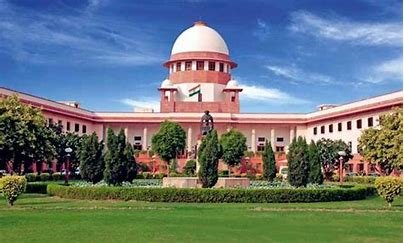
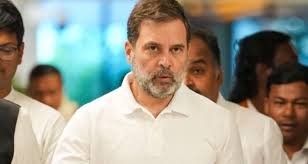
The Supreme Court will hear on Thursday a petition filed by Congress leader Rahul Gandhi and several other opposition leaders alleging large-scale voter deletions and irregularities during the Special Intensive Revision (SIR) of electoral rolls. According to the court’s cause list, the matter will be heard by a bench comprising Chief Justice Surya Kant and Read More…
court
Supreme Court Procedure: Rules, Benches and Judgments
The Supreme Court of India has the authority to frame rules regulating its general practice and procedure, subject to the approval of the President. Constitutional cases and references made by the President under Article 143 of the Constitution are heard by benches comprising at least five judges. Other cases are decided by single-judge benches or Read More…
Key doctrines and legal principles under the Constitution
New Delhi: The Constitution of India incorporates several important legal doctrines and principles that guide the interpretation and application of constitutional provisions. Some of the key doctrines and principles include:
Supreme Court procedure governed by rules
New Delhi: The Supreme Court can, with the approval of the President, frame rules regulating the general practice and procedure of the Court. Constitutional cases and references made by the President under Article 143 are heard by a Bench comprising at least five judges. Other cases are heard by single judges or Division Benches. Judgments Read More…
Types of Motions
New Delhi: Motions moved by members to raise discussions on various matters in the House are broadly classified into three categories: substantive motions, substitute motions and subsidiary motions. A substantive motion is an independent proposal dealing with an important matter, such as the impeachment of the President or the removal of the Chief Election Commissioner. Read More…
Supreme Court procedure
New Delhi: The Supreme Court can, with the approval of the President, make rules regulating the general practice and procedure of the Court. Constitutional cases and references made by the President under Article 143 are heard by a Bench comprising at least five judges. Other cases are heard by single judges or Division Benches, depending Read More…
SC to examine EC decisions on SIR, clarifies it did not approve modified Form 6
NEW DELHI: The Supreme Court on Monday said it would scrutinise decisions taken by the Election Commission in connection with the Special Intensive Revision (SIR) of electoral rolls and set aside any decision found to be inconsistent with the law. A bench headed by Chief Justice of India Surya Kant and comprising Justices Joymalya Bagchi Read More…
Gokulam Gopalan files complaint against Tushar Vellappally over alleged defamatory Facebook post
THRISSUR: Businessman Gokulam Gopalan has filed a complaint before the Chief Judicial Magistrate Court in Thrissur against BDJS state president and SNDP Yogam vice-president Tushar Vellappally, alleging that he made false and defamatory allegations against him through a Facebook post. The complaint has been filed under Section 223 of the Bharatiya Nagarik Suraksha Sanhita (BNSS). Read More…
SC: Revenue authorities cannot review own orders without specific statutory power
New Delhi: The Supreme Court has held that revenue authorities cannot review their own quasi-judicial orders unless such power is specifically conferred by law. The ruling came in State of West Bengal v. Jai Hind Pvt Ltd (2026), concerning Section 57A of the West Bengal Estates Acquisition Act, 1953. The provision allows the state government Read More…
SC says it can annul EC decisions not in accordance with law
New Delhi: The Supreme Court on Monday said it would examine decisions taken by the Election Commission (EC) and annul those found to be contrary to law. A bench headed by Chief Justice of India Surya Kant, along with Justices Joymalya Bagchi and V Mohana, issued notices to the Centre and the EC on pleas Read More…