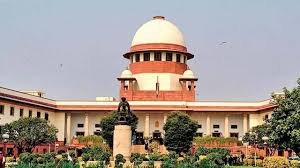
The Supreme Court, in K.S. Dinachandran v. Shyla Joseph (2025), has clarified that facts brought out through cross-examination, including responses to leading questions, carry full evidentiary value and can be relied upon to prove a case.The case concerned the proof of execution of a will under Section 63(c) of the Indian Succession Act read with Section 68 of the Indian Evidence Act. The law requires a will to be attested by two witnesses, with at least one attesting witness being examined before the court to prove its execution.
In the case, one of the attesting witnesses had died, while the surviving witness testified that he had signed the will. During cross-examination, he confirmed that the testator had signed the will in his presence. When asked whether the other attesting witness had also signed the document, he answered in the affirmative.
The Supreme Court held that when the examination-in-chief and the cross-examination are read together, the execution of the will stood duly proved. The Court observed that although a crucial fact was not stated during the examination-in-chief, it was established during cross-examination through a positive suggestion.
The Bench further ruled that answers elicited in response to leading questions during cross-examination cannot be treated as having lesser probative value than evidence recorded in examination-in-chief.The judgment is considered significant for trial practice, as it reiterates that evidence brought on record during cross-examination is legally valid and can fill gaps in the testimony given during examination-in-chief.
Legal experts have noted that the ruling also serves as a reminder that cross-examination should be conducted strategically, as questions intended to challenge a witness may sometimes strengthen the opposing party’s case.