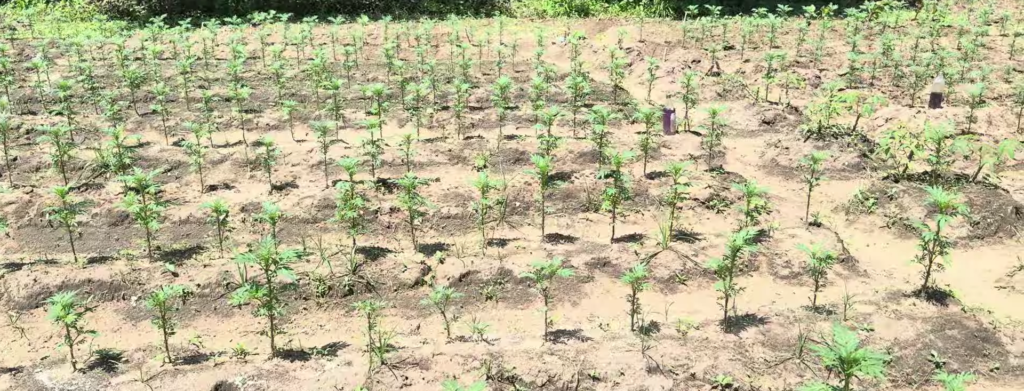
THRISSUR: Rows of marigold plants stand in full bloom on what was once barren and unused land in Nattika, turning the landscape into a sea of colour ahead of the Onam season.
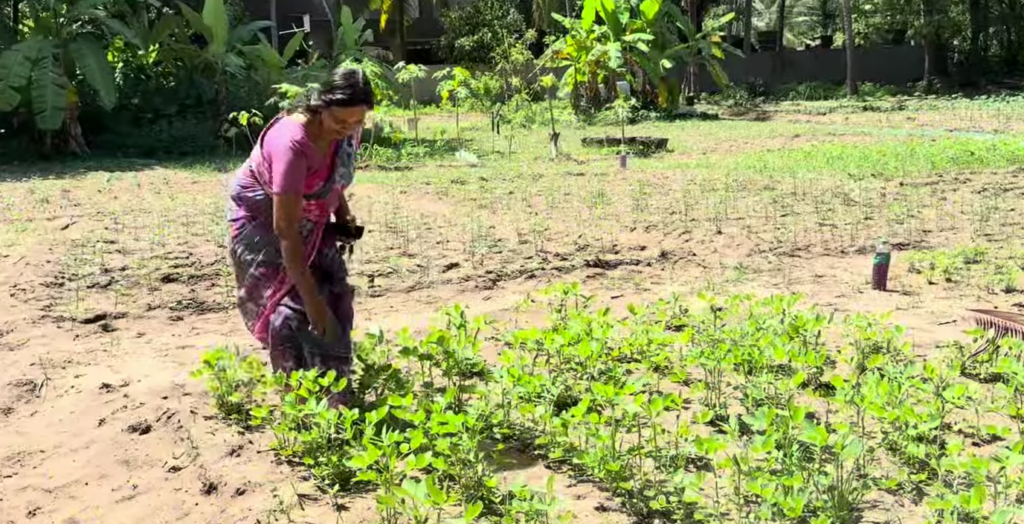
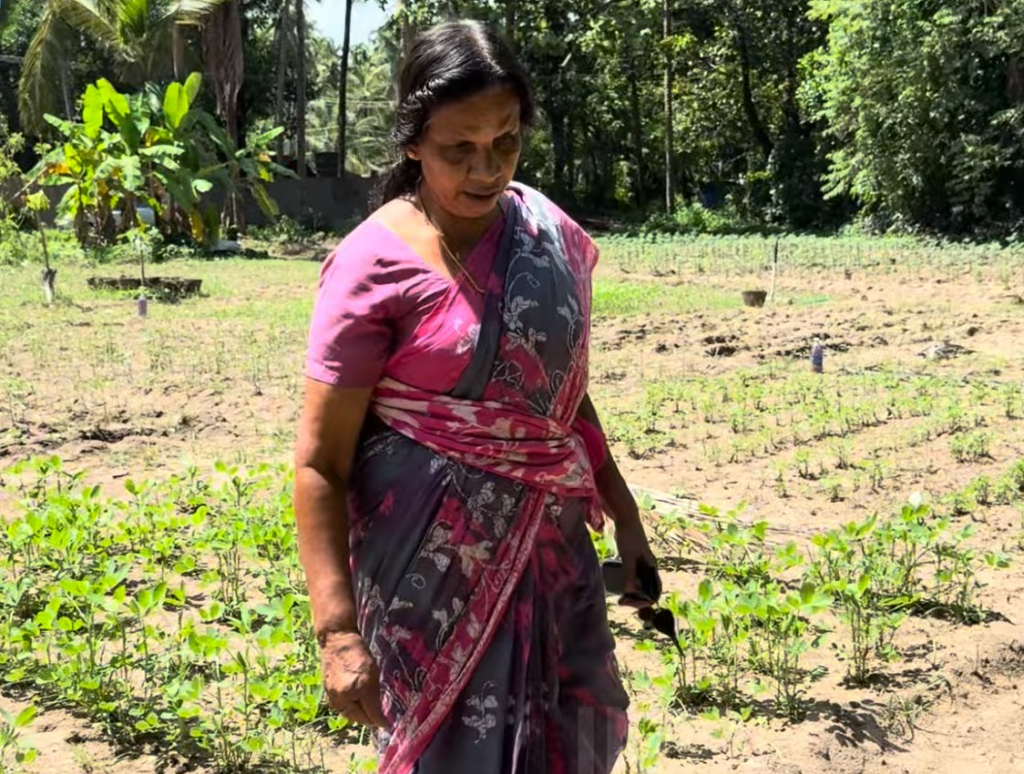
Behind these flower fields is not a team of workers, but the determination and hard work of 62-year-old farmer Sheeja, who has been transforming unused patches of land into productive farmland.
Sheeja currently cultivates crops across four different locations in Nattika, growing marigolds for the Onam market along with a wide variety of vegetables, tubers and other crops.
Her fields are home to sweet potatoes, tapioca, chillies, tomatoes, elephant foot yam, beans, okra, brinjal, groundnuts and turmeric, apart from marigolds.
Turning barren land into farmland
One of the most remarkable aspects of Sheeja’s farming is that she does not restrict her work to her own land. She identifies unused plots lying fallow and turns them into productive agricultural spaces.
She currently farms at four different locations in Nattika, spending around two hours at each site to complete the necessary agricultural work.
She does not depend on a large workforce. From sowing seeds and tending the crops to removing weeds and harvesting, Sheeja handles most of the work herself.
Her farming journey demonstrates that bringing unused land under cultivation can benefit both farmers and landowners.
Multiple crops in the same field
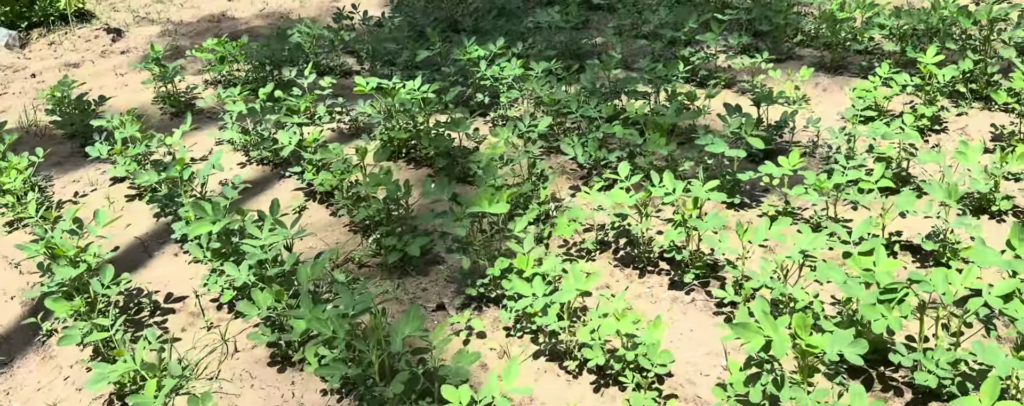
Instead of depending on a single crop, Sheeja follows a diversified farming model, cultivating several crops in the same field.
Her current fields feature marigolds, tomatoes, beans, chillies, okra, brinjal, groundnuts and turmeric, among others.
Her approach is simple: make the best possible use of every inch of available land.
Cornflower marigolds and koorka together
Another interesting feature of Sheeja’s farming is her use of intercropping.
Koorka, or Chinese potato, has been planted between rows of marigolds. By the time the marigolds are ready for harvest, the koorka will have reached a stage of growth that allows it to continue developing before its own harvest.
This enables the same piece of land to produce more than one crop at different times.
She follows a continuous cropping pattern, moving from one crop to the next instead of leaving the land unused.
Her objective is to make maximum use of both land and time.
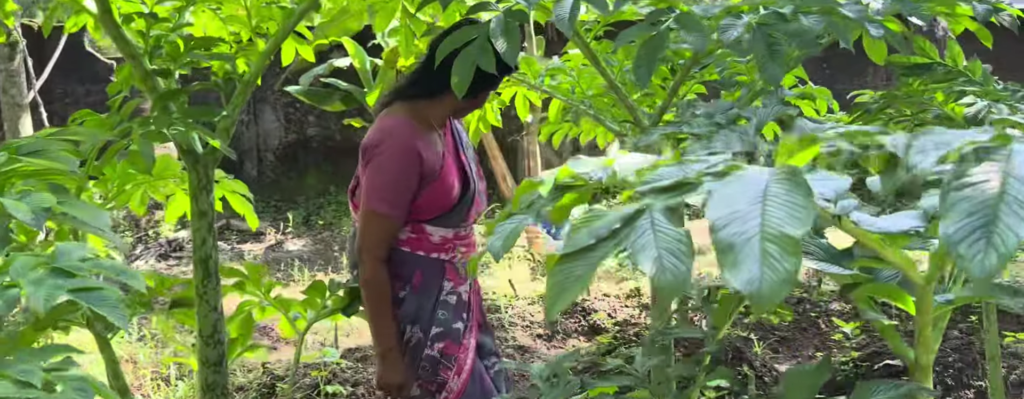
One kilogram of seed can yield 12 kg of groundnuts
Groundnut is another notable crop in Sheeja’s fields.
According to Sheeja, under favourable conditions, one kilogram of groundnut seed can produce up to 12 kilograms of the crop. Groundnuts can also be harvested in around three months.
The relatively short cultivation period allows her to move quickly to the next crop after harvesting, helping her obtain greater productivity from the same piece of land.
A 45-year bond with paddy farming
Sheeja’s association with farming did not begin recently. She has been actively involved in paddy cultivation for the past 45 years.
She believes that a single grain of paddy, after being sown and nurtured into a plant, can eventually produce around 240 grains.
Paddy generally takes between 90 and 120 days to reach harvest.
Sheeja is directly involved in every stage of cultivation, from sowing and preparing field bunds to raising seedlings, transplanting, weeding and crop maintenance.
Farming and climbing coconut trees
Sheeja is equally self-reliant when it comes to other farm-related activities.
She is not hesitant to climb coconut trees either. With the help of a coconut-climbing machine, she harvests coconuts and tender coconuts herself whenever required.
At 62, her enthusiasm for farming remains undiminished.

Farming without chemical fertilisers
Sheeja avoids chemical fertilisers and gives priority to natural farming practices that protect the soil and crops.
After harvesting one crop, she prepares the land for the next. Crop rotation is an important part of her farming practice.
This helps maintain soil productivity while also reducing the risks associated with depending on a single crop.
Taking charge of the market
For Sheeja, farming does not end with harvesting. She also takes an active role in marketing her produce.
Instead of depending entirely on middlemen, she sells her farm products directly, giving her greater control over the value generated from her produce.
Losses have not stopped her
Farming does not always guarantee profits. Crop failures can occur because of weather conditions, pests, diseases and fluctuations in market prices.
Sheeja too has experienced losses.
But her response to setbacks has never been to give up farming. She simply returns to the field, sows again and starts the cycle once more.
Her dedication to farming and her innovative agricultural practices have also earned her several awards and recognitions.
A message from the barren land
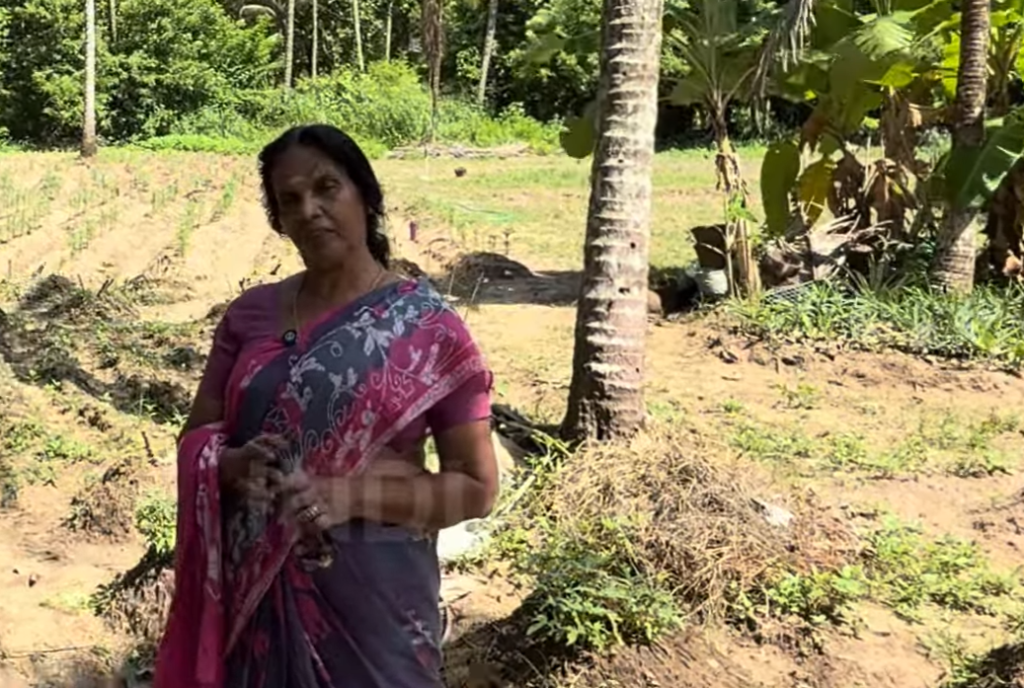
Through her work, Sheeja has demonstrated that unused land can once again become productive when it receives the right care and effort.
Working alone across four locations, with limited resources and a wide range of crops, she has created a farming model built on determination, diversity and efficient use of land.
Her journey offers a simple message to the next generation: land does not have to be large to farm, age does not have to be a barrier, and a lack of workers does not have to end agricultural dreams. Even barren land can be turned into gold through farming.
As her marigolds bloom in anticipation of the Onam market, the colour they bring to Nattika reflects more than the beauty of flowers. It is the colour of a farmer’s perseverance—the colour of a determination to turn barren land into abundance.