
M. A SUDHEER BABU, PATTAMBI, DISTRICT SOIL SURVEY OFFICER, KOZHIKODE
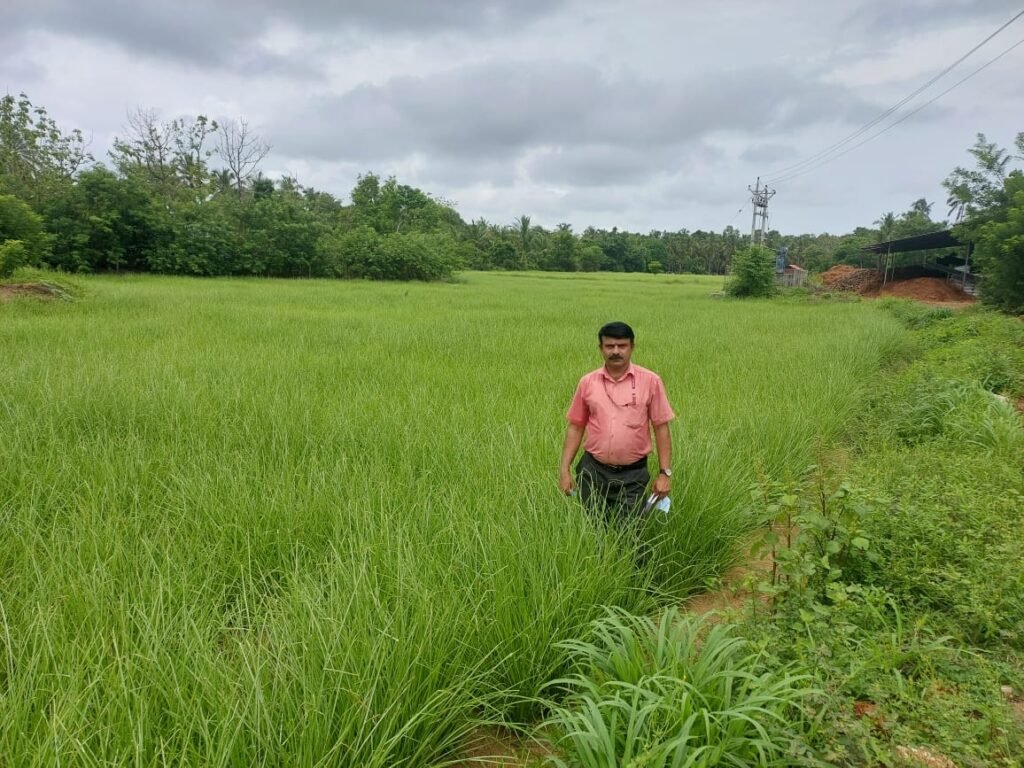
oil is one of the most important natural resources, and vetiver, locally known as Ramacham, can play a crucial role in preventing soil degradation and controlling erosion. Known as vetiver in English and khus in Hindi and Bengali, the aromatic grass is also valued as an important medicinal and essential-oil crop.
The scientific name of vetiver was earlier given as Vetiveria zizanioides. It is now classified as Chrysopogon zizanioides. The plant is particularly valuable for its extensive root system, which helps bind soil and reduce erosion.
A Natural Barrier Against Soil Erosion
Planting vetiver hedges across slopes can significantly help control soil erosion. The roots hold the soil together and can also help stabilise vulnerable areas such as stream banks and road edges prone to soil erosion and landslides.
Vetiver is already cultivated in sandy areas of Chavakkad and Orumanayur in Thrissur district, as well as in Ponnani and Veliancode in Malappuram district.
Experts say planting vetiver along the sides of streams and roads where soil erosion is likely can provide an effective natural protective barrier.
Scope for Vetiver Cultivation in Kerala
There is considerable potential to expand vetiver cultivation, particularly in Thrissur district and Kerala’s coastal belt. Financial assistance through Krishi Bhavans and other government agencies could encourage more farmers to take up the crop.
Small-scale industries based on vetiver could also be established. Its roots can be used to make a variety of value-added products, including mats, soap, fans, footwear, curtains and other handicrafts.
Farmers could be supported in processing vetiver roots and developing such products for the market, creating additional sources of income.
Useful for Soil and Water Remediation
Vetiver has applications beyond erosion control. Its extensive root system can help in the remediation of polluted soil and water.
The plant has the ability to absorb certain heavy metals from contaminated environments, including cadmium, lead and mercury, thereby helping reduce their concentration under appropriate remediation conditions.
Because of this ability, vetiver is increasingly recognised as a useful plant for environmental protection and ecological restoration.
South Indian Varieties Yield More Oil
Vetiver varieties are broadly classified into South Indian and North Indian types. South Indian varieties are generally known for producing higher quantities of roots and essential oil, while North Indian varieties are noted for the distinctive fragrance of their oil.
Among the varieties suitable for cultivation are ODV-3, released by CIMAP, Lucknow, along with Sugandha, Dharini, Gulabi, Kesari and Sim Vriddhi. Varieties such as Pusa Hybrid-7 and Pusa Hybrid-8, released by the Pusa research centre, are also suitable.
Kerala Agricultural University has released varieties including Bhumika from its Odakkali research centre and KAU Sougandhika, a newer variety known for its high oil content.
Coastal Kerala Offers Good Potential
The sandy coastal belt extending from Chavakkad to Ponnani offers favourable conditions for vetiver cultivation. In several areas where paddy cultivation was once common, farmers have now started growing vetiver.
One of the major advantages of the crop is its ability to withstand both high summer temperatures and heavy rainfall, making it suitable for Kerala’s varied climatic conditions.
Cultivation generally begins during January and February, while planting, harvesting and root collection can be organised through farmer groups and collectives.
A Crop with Multiple Uses
Vetiver is valued primarily for its roots, which contain aromatic oil. The roots are widely used in traditional products and handicrafts.
After harvesting, the roots can be processed for use in products such as mats, soaps, hand fans, footwear, curtains and floor mats. The essential oil extracted from the roots also has applications in perfumery and related industries.
How to Cultivate Vetiver
Vetiver is generally propagated using rooted slips or tillers after removing the mature roots. Farmers can prepare raised beds or rows and plant one or two slips at intervals of around 30 to 45 centimetres.
For good growth, weed control and earthing-up are important. Organic manure such as groundnut cake can be applied during the second and fourth months after planting. Fertiliser application based on soil testing and recommendations from agricultural experts can further improve yields.
The Bhumika variety is particularly suitable for soil conservation. An important advantage is that it does not flower, preventing the plant from spreading uncontrollably through seeds.
Bhumika roots can remain viable even during dry periods. Where irrigation facilities are unavailable, planting immediately after the onset of the monsoon is recommended. Vetiver can be cultivated in open areas receiving adequate sunlight.
Up to Eight Tonnes of Dry Roots
Bhumika can produce around two tonnes of roots per acre after approximately 18 months, according to cultivation experience.
The recently released KAU Sougandhika is considered a high-yielding variety capable of producing around six to eight tonnes of dry roots per hectare, along with a high essential-oil content.
Need for Institutional Support
Farmers involved in vetiver cultivation are calling for greater institutional support, including financial assistance through the Agriculture Department and the Micro, Small and Medium Enterprises sector.
They also seek easier access to bank loans, scientific training in vetiver cultivation, processing facilities and, most importantly, a stable and organised market for vetiver roots and value-added products.
Protecting the Bharathapuzha Riverbanks
The crop could also play an important role in protecting riverbanks. Several stretches along the Bharathapuzha, popularly known as the Nila, face soil erosion and bank instability.
Planting vetiver hedges along vulnerable riverbanks could help strengthen the soil and reduce erosion. Such measures, combined with appropriate riverbank management, could provide an environmentally friendly approach to protecting the river ecosystem.
With its ability to conserve soil, withstand difficult weather conditions, provide essential oil and support value-added industries, vetiver offers considerable potential for Kerala’s farmers.
It is time to look beyond seeing Ramacham merely as a grass. With its powerful roots firmly holding the soil, vetiver could well become one of Kerala’s natural champions of soil conservation.