
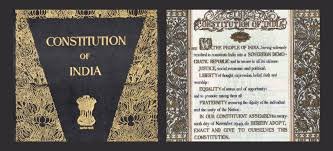
New Delhi: The Constitution of India incorporates several important legal doctrines and principles that guide the interpretation and application of constitutional provisions. Some of the key doctrines and principles include:
- Ejusdem Generis: Means “of the same kind” (Article 12).
- Ab Initio: Means “from the very beginning” (Article 13).
- Doctrine of Judicial Review: Courts can declare laws unconstitutional if they violate Fundamental Rights (Articles 13, 32 and 226).
- Doctrine of Eclipse: A law inconsistent with Fundamental Rights is not void from the beginning but becomes unenforceable to the extent of the inconsistency (Article 13).
- Doctrine of Severability: Only the portion of a law that violates Fundamental Rights becomes void, while the remaining provisions continue to operate (Article 13).
- Rule of Law: Emphasises the supremacy of law and the absence of arbitrary power (Article 14).
- Principle of Reasonable Classification: Permits reasonable classification while ensuring equality before law (Article 14).
- Audi Alteram Partem: Means that no person should be condemned unheard (Articles 14, 21 and 22).
- Wednesbury Principle: Applies to the judicial review of executive discretion (Article 14).
- Pari Passu: Means “on an equal footing” (Article 14).
- Principle of Proportionality: Restrictions imposed by the State should not be arbitrary or excessive in relation to their objective (Article 19).
- Ex Post Facto: Concerns retrospective penal laws (Article 20).
- Double Jeopardy: No person can be prosecuted and punished more than once for the same offence (Article 20).
- Doctrine of Self-Incrimination: An accused person cannot be compelled to be a witness against himself or herself (Article 20).
- Ubi Jus Ibi Remedium: Means “where there is a right, there is a remedy” (Article 21).
- Doctrine of Rarest of the Rare: The death penalty is to be imposed only in the rarest of rare cases (Article 21).
- Doctrine of Public Trust: Natural resources are held in trust for public use (Article 21).
- Precautionary Principle: Authorities must take preventive measures against environmental degradation (Article 21).
- Polluter Pays Principle: Those responsible for environmental damage may be required to compensate for the loss caused (Article 21).
- Habeas Corpus: Means “you shall have the body” (Articles 32 and 226).
- Locus Standi: Refers to the legal standing or right of a person to approach a court (Articles 32 and 226).
- Mandamus: Means “we command” (Articles 32 and 226).
- Quo Warranto: Means “by what authority” (Articles 32 and 226).
- Certiorari: A writ through which a higher court reviews proceedings of a lower court (Articles 32 and 226).
- Doctrine of Distributive Justice: Aims to promote economic justice and reduce inequalities (Articles 38 and 39).
- Principle of Collective Responsibility: The Council of Ministers is collectively responsible for government policies and actions (Article 75).
- Principle of Individual Responsibility: Each minister is responsible for the functioning of his or her ministry (Article 75).
- Sine Die: Means “without assigning a future date” (Article 85).
- Ad Hoc: Means “for a special purpose” (Article 127).
- Nunc Pro Tunc: Means “now for then” (Article 136).
- Stare Decisis: Means “to stand by precedents” (Article 141).
- Obiter Dicta: Refers to observations made by a judge that are not essential to the decision (Article 141).
- Ratio Decidendi: Refers to the legal reason or principle underlying a court’s decision (Article 141).
- Principle of Consistency of Law: A smaller Bench generally follows the decision of a larger Bench (Article 141).
- Theory of Territorial Nexus: A State Legislature may exercise legislative power beyond its territory only when there is a sufficient connection between the State and the subject matter (Article 245).
- Plenary Power of Legislature: Refers to the legislature’s broad law-making power, subject to constitutional limitations (Article 246).
- Ancillary or Incidental Power: Includes powers necessary or incidental to the exercise of legislative power over a main subject (Article 246).
- Doctrine of Pith and Substance: Determines the true nature and character of a law to identify the appropriate legislative field (Article 246).
- Doctrine of Colorable Legislation: Means that what cannot be done directly cannot be done indirectly (Article 246).
- Bona Vacantia: Refers to property or goods belonging to no known owner (Article 296).
- Doctrine of Eminent Domain: Recognises the State’s power to acquire private property for public purposes, subject to constitutional requirements (Article 300A).
- Imperium in Imperio: Means “sovereignty within sovereignty” (Article 324).
- In Foro Conscientiae: Means “in the forum of conscience” (Article 363).
- Doctrine of Basic Structure: Holds that Parliament’s power to amend the Constitution cannot be used to destroy or alter its basic structure (Article 368).


