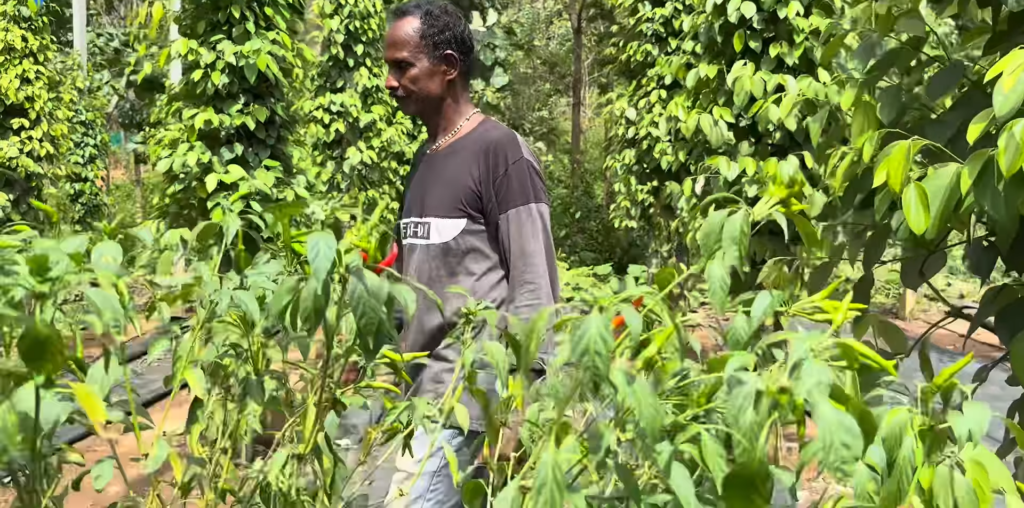
Returning to farming after years of expatriate life is a dream for many. But for Raju, a farmer from Vattayi village near Poomala in Thrissur district, that dream has turned into a successful reality.
After years of hard work in the Gulf, Raju returned home and chose pepper cultivation as his livelihood. Today, his decision has transformed him into a successful farmer, with his farm yielding what is often described as the ‘black gold’ of Kerala.
From Rubber to Pepper
Raju shifted from rubber cultivation to pepper after falling rubber prices and the shortage of workers for tapping made rubber farming increasingly difficult.
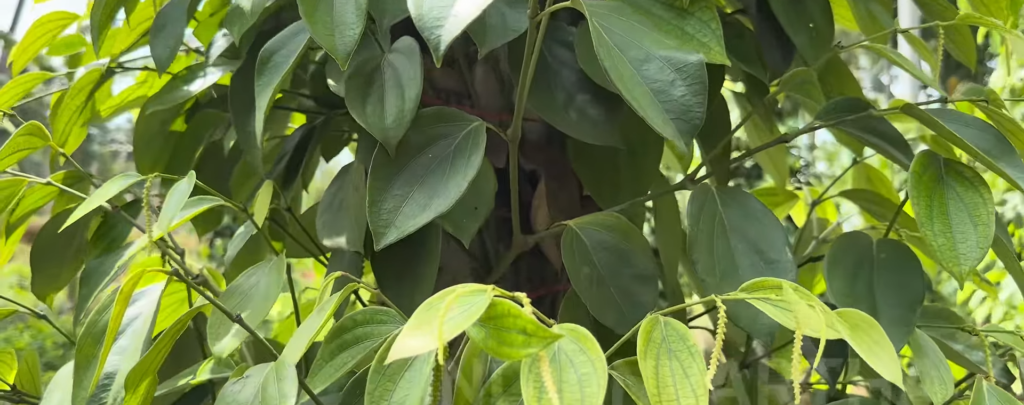
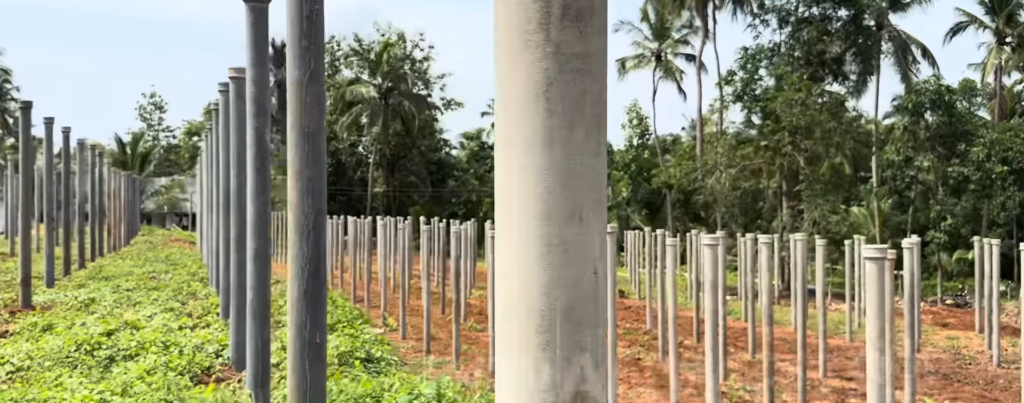
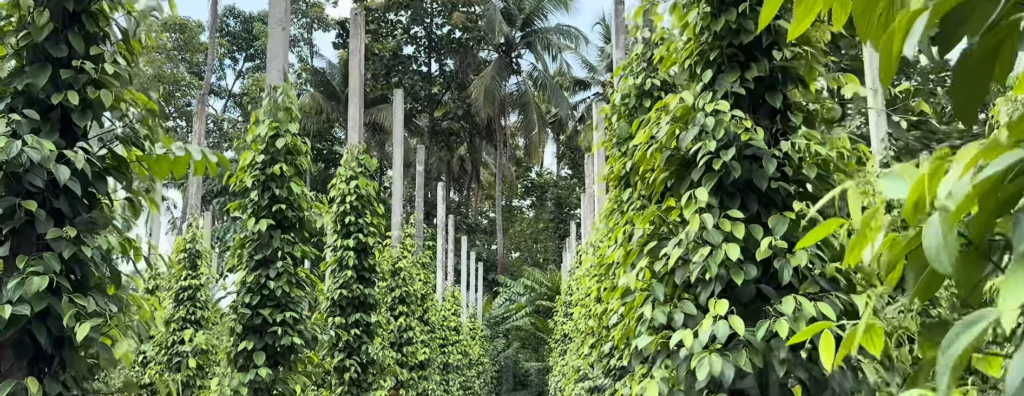
Of his roughly 2.25-acre property, more than 1.5 acres is now dedicated to different varieties of pepper. The vines are grown on concrete poles, and more than 100 pepper plants in his farm are now producing a good yield.
Varieties Suited to the Climate
Keeping Kerala’s changing weather conditions in mind, Raju selected pepper varieties known for disease resistance and good productivity. His farm includes varieties such as Karimunda, Vattamundi, Neelamundi, Kumbukkal and Kairali.
The traditional Karimunda variety is considered well suited to Kerala’s climate. Its disease resistance and ability to provide long-term yields are among its key features.
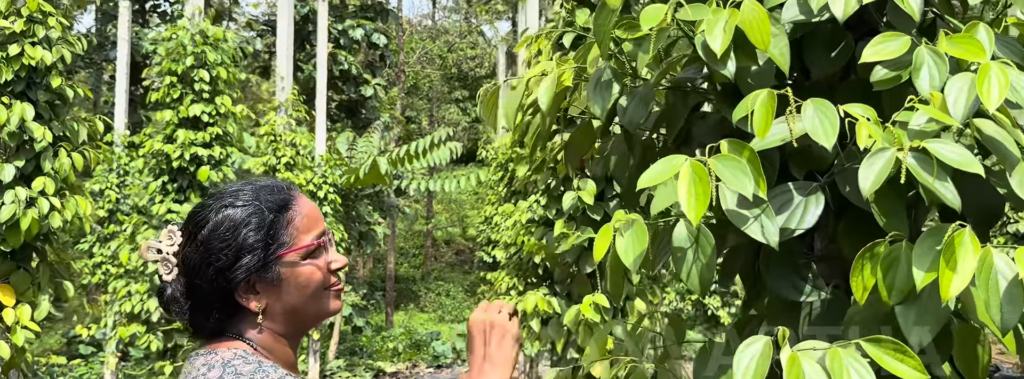
Vattamundi is known for producing more spikes and higher yields, besides having resistance to diseases such as quick wilt.
Kumbukkal, developed by Idukki farmer K.T. Varghese, is known for its rapid growth and good yield.
Kairali is suitable for cultivation on concrete poles and PVC pipes. Since the variety does not grow excessively tall, it is relatively easy to maintain.
According to Raju, cultivating different varieties together can reduce the risk of a disease affecting the entire plantation, as different varieties may respond differently to diseases.
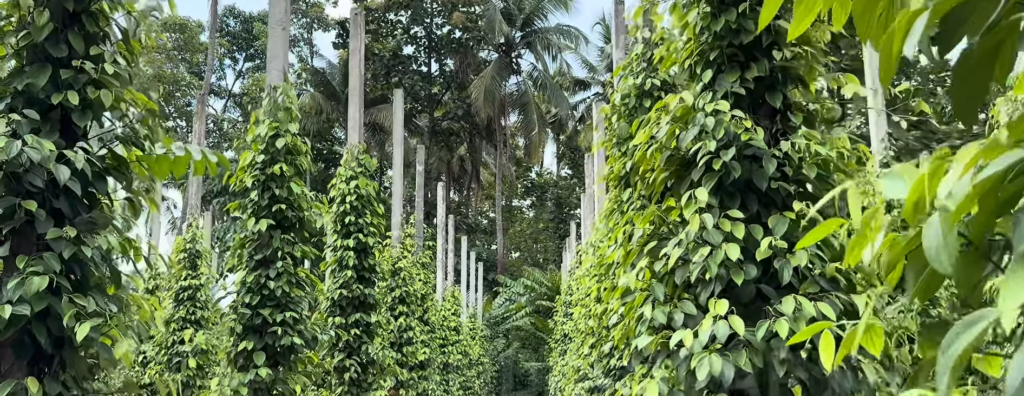
The Farming Dream of an Expatriate
Raju went abroad in the 1990s to work in the tile industry. However, the greenery and natural surroundings of his homeland remained close to his heart.
Watching agricultural programmes on television further strengthened his interest in farming. When he eventually returned home, he decided to make agriculture his livelihood.
Success Built with His Own Hands
Raju makes even the cement poles required for his farm himself to reduce cultivation costs. Each pole costs him only around Rs 250 to Rs 300 to produce, while similar poles available in the market can cost considerably more.
From digging pits in the plantation to caring for the plants, he carries out most of the farm work himself.
Strength in Organic Farming
Raju follows organic farming practices and avoids chemical fertilisers. One of his main fertilisers is a fermented slurry prepared using fresh cow dung, groundnut cake and jaggery.
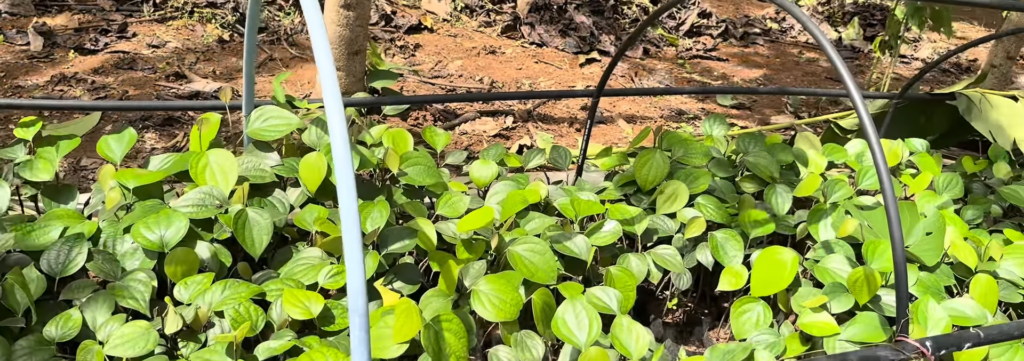
He also uses a drip irrigation system to ensure adequate water supply. According to him, these practices help maintain healthy crops while preserving soil quality.
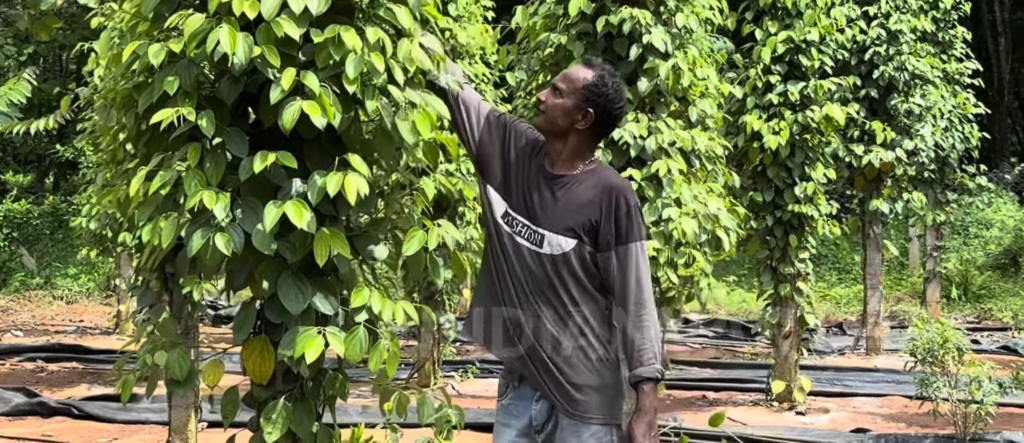
Key Points in Pepper Cultivation
June is considered an ideal time to plant pepper saplings. The saplings should be planted slightly away from the supporting pole and the vines can later be trained onto it.
Adequate irrigation during summer and proper care, particularly during the first two years, are essential for achieving good yields.
Organic inputs such as groundnut cake, neem cake and bone meal can also support plant health and productivity.
The Satisfaction of Farming
Raju’s journey from expatriate life back to agriculture has become an inspiration for many young people.
He believes that success in farming depends not only on large investments but also on confidence, hard work and a willingness to approach agriculture scientifically.
By transforming his former rubber plantation into a productive pepper farm, Raju has demonstrated that farming can be not only a profitable venture but also a source of personal satisfaction.
He also credits the wholehearted support of his family for giving him the confidence and energy to continue moving forward in his journey as an expatriate-turned-farmer.