
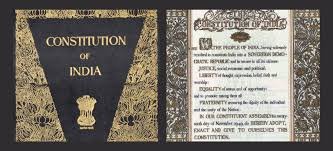
New Delhi: Articles 324 to 329 of the Indian Constitution, under Part XV, establish the constitutional framework governing elections in the country. These provisions define the powers of the Election Commission, ensure equal access to electoral rolls, establish the principle of adult suffrage and outline the legislative and judicial framework for conducting elections.
Article 324 vests the superintendence, direction and control of the preparation of electoral rolls and the conduct of elections to Parliament, State Legislatures, and the offices of the President and Vice-President in the Election Commission of India. It also provides that the President or a State Governor must make necessary staff available to the Election Commission when requested.
Article 325 provides for a single general electoral roll for every territorial constituency. It prohibits the exclusion of any person from electoral rolls or the creation of special electoral rolls solely on the grounds of religion, race, caste or sex.
Article 326 establishes the principle of adult suffrage. It provides that every Indian citizen aged 18 or above is entitled to be registered as a voter, provided they are not otherwise disqualified under the Constitution or any law made by the appropriate legislature. Disqualifications may include non-residence, unsoundness of mind, crime or corrupt or illegal practices.
Article 327 empowers Parliament to make laws concerning elections to either House of Parliament and the Houses of State Legislatures. These provisions may cover the preparation of electoral rolls, delimitation of constituencies and other matters necessary for the proper constitution of elected Houses.
Article 328 grants State Legislatures the power to make laws concerning elections to their respective legislative bodies, provided Parliament has not already made provisions on the relevant matters.
Article 329 places restrictions on judicial interference in electoral matters. It states that laws relating to the delimitation of constituencies and the allocation of seats cannot be challenged in courts. It also provides that elections to Parliament and State Legislatures can be challenged only through an election petition filed before the authority and in the manner prescribed by law.
Together, these constitutional provisions seek to ensure an organised electoral process, protect the principle of equality in voter registration and establish the respective responsibilities of the Election Commission, Parliament, State Legislatures and the judiciary.