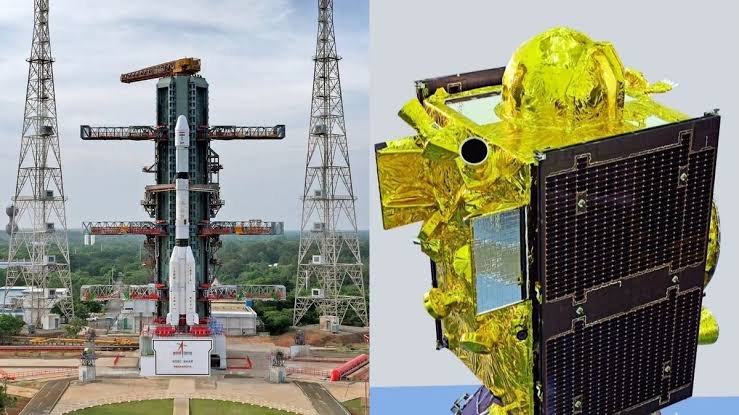
India’s regional navigation system, NavIC, is set to regain its minimum operational capacity following the launch of the NVS-03 satellite by the Indian Space Research Organisation (ISRO) on October 30.
The development comes after an atomic clock aboard one of India’s navigation satellites stopped functioning on March 13, 2026, at an altitude of approximately 36,000 km above the Indian Ocean. The failure left NavIC with only three operational navigation satellites, one fewer than the four required to independently determine a user’s position.
The launch of NVS-03 is aimed at strengthening the country’s indigenous navigation infrastructure and restoring the system to its minimum operational configuration.
India developed NavIC, formerly known as the Indian Regional Navigation Satellite System (IRNSS), to reduce its dependence on foreign navigation services, including the United States’ Global Positioning System (GPS). The strategic importance of an independent navigation system became particularly evident following the Kargil conflict, although claims regarding the specific role of GPS restrictions during the conflict have not been officially confirmed.
Satellite navigation systems rely on precise timing signals transmitted by multiple satellites. At least four satellites are required to determine a receiver’s three-dimensional position and correct its clock error. Even a timing discrepancy of one-millionth of a second can result in a positioning error of approximately 300 metres.
India initially planned a constellation of seven navigation satellites positioned over the Indian Ocean region. In April 2016, Prime Minister Narendra Modi named the system NavIC, meaning ‘Navigation with Indian Constellation’, following the launch of IRNSS-1G.
However, the system subsequently faced a series of technical setbacks involving its atomic clocks. The clocks imported for the initial satellites began failing one after another. The Comptroller and Auditor General (CAG), in its 2018 report, also highlighted concerns over the performance and reliability of the navigation satellite programme.
In response, ISRO developed an indigenous atomic clock, which was first deployed aboard NVS-01, launched in May 2023.
The programme encountered another setback with NVS-02, launched in January 2025 during ISRO’s 100th launch mission. A technical issue involving a valve in the satellite’s propulsion system prevented the intended orbit-raising manoeuvre from being completed, leaving the satellite unable to reach its designated orbit.
With the latest launch, ISRO aims to address the gaps in the NavIC constellation. The system has also gained importance amid growing concerns over satellite navigation interference. According to reports submitted to the government, 2,354 incidents of GPS interference were reported over Indian airspace during a two-year period.
NVS-03 was launched aboard the GSLV-F18 rocket on October 30, 2026. Following the mission, ISRO reported that NavIC had been restored to its minimum operational configuration.
The launch marks another step in India’s efforts to strengthen its independent satellite navigation capabilities. However, further satellite launches and improvements in system reliability will remain important to ensure the long-term continuity and accuracy of NavIC services.