
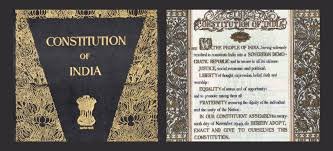
New Delhi: Constitutional law in India is built around several important legal doctrines and principles that help courts interpret the Constitution, examine legislation and protect fundamental rights. These doctrines have evolved through constitutional provisions, judicial decisions and established principles of jurisprudence.
From judicial review and the doctrine of basic structure to legal principles such as Audi Alteram Partem, Stare Decisis and Ratio Decidendi, these concepts are frequently relevant to the functioning of India’s constitutional and judicial system.
Here is a concise list of 53 important doctrines and legal principles associated with different provisions of the Constitution:
Fundamental Rights and Constitutional Interpretation
- Ejusdem Generis – Means “of the same kind” and is used as a rule of statutory interpretation. (Article 12)
- Ab Initio – Means “from the very beginning.” (Article 13)
- Doctrine of Judicial Review – Enables the Supreme Court and High Courts to examine the constitutionality of laws and executive actions, including their conformity with Fundamental Rights. (Articles 13, 32, 226)
- Doctrine of Eclipse – A pre-Constitution law inconsistent with Fundamental Rights is not necessarily erased from the statute book; its operation may remain eclipsed to the extent of the inconsistency. (Article 13)
- Doctrine of Severability – If only a portion of a law violates the Constitution, the unconstitutional portion may be separated while the remaining provisions continue to operate, if they can stand independently. (Article 13)
- Doctrine of Rule of Law – Emphasises the supremacy of law and protection against arbitrary exercise of power. (Article 14)
- Principle of Reasonable Classification – Article 14 permits reasonable classification but prohibits arbitrary discrimination; equals should be treated alike and differential treatment must have a constitutionally valid basis. (Article 14)
- Audi Alteram Partem – Means “hear the other side”; a person should generally be given a fair opportunity to be heard before adverse action is taken. (Articles 14, 21, 22)
- Wednesbury Principle – A judicial standard used to examine whether administrative discretion has been exercised in an unreasonable or legally impermissible manner. (Article 14)
- Lex Non a Rege Est Violanda – Expresses the principle that even the ruler is subject to the law. (Article 14)
- Pari Passu – Means “on an equal footing” or at the same level. (Article 14)
- Rex Quod Injustum Est Facere Non Potest – Means the king cannot do what is unjust, reflecting the principle that public authority is subject to law. (Article 14)
Rights and Criminal Justice
- Principle of Proportionality of Restrictions – Restrictions on fundamental rights should bear a reasonable relationship to the objective sought and should not be excessive or arbitrary. (Article 19)
- Ex Post Facto – Refers to retrospective criminal legislation; Article 20 prohibits conviction under a law that was not in force when the act was committed or the imposition of a greater penalty retrospectively. (Article 20)
- Double Jeopardy – A person cannot be prosecuted and punished more than once for the same offence, subject to the constitutional provision. (Article 20)
- Nemo Debet Bis Vexari Pro Una et Eadem Causa – Means a person should not be vexed twice for the same cause. (Article 20)
- Nemo Bis Punitur Pro Eodem Delicto – Expresses the principle that a person should not be punished twice for the same offence. (Article 20)
- Autrefois Convict – A plea that the accused has already been tried and convicted for the same offence. (Article 20)
- Nova Constitutio Futuris Formam Imponere Debet, Non Praeteritis – Means a new law should generally operate prospectively rather than retrospectively, particularly in the context of criminal liability. (Article 20)
- Doctrine of Self-Incrimination – An accused person cannot be compelled to be a witness against himself. (Article 20)
- Nemo Tenetur Prodere Accusare Seipsum – Means no person is bound to accuse or incriminate himself. (Article 20)
- Nemo Punitur Pro Alieno Delicto – Means a person should not be punished for the offence or wrong committed by another. (Article 20)
- Ubi Jus Ibi Remedium – Means “where there is a right, there is a remedy.” (Article 21)
- Doctrine of Rarest of the Rare – The death penalty is to be imposed only in the “rarest of rare” cases in accordance with established judicial principles. (Article 21)
Environmental and Public Interest Principles
- Doctrine of Public Trust – Natural resources such as air, water and forests are held by the State in trust for the public and cannot ordinarily be treated as resources for unrestricted private ownership. (Article 21)
- Precautionary Principle – Authorities should take preventive measures against environmental harm, particularly where serious or irreversible damage is possible. (Article 21)
- Polluter Pays Principle – A person or entity responsible for environmental pollution can be required to bear the cost of preventing and remedying the damage caused. (Article 21)
Constitutional Writs
- Habeas Corpus – Literally means “you shall have the body”; it is used to secure judicial review of unlawful detention. (Articles 32, 226)
- Locus Standi – Refers to the legal standing or right of a person to approach a court in a particular matter. (Articles 32, 226)
- Mandamus – Means “we command”; a writ issued to direct a public authority to perform a legal duty. (Articles 32, 226)
- Quo Warranto – Means “by what authority”; a writ used to challenge a person’s legal authority to hold a public office. (Articles 32, 226)
- Certiorari – A writ through which a higher court may review and quash an order of a lower court or tribunal in appropriate circumstances. (Articles 32, 226)
Directive Principles and Executive Responsibility
- Doctrine of Distributive Justice – Seeks to promote social and economic justice and reduce inequalities in society. (Articles 38, 39)
- Principle of Collective Responsibility – The Union Council of Ministers functions as a collective body and is collectively responsible to the Lok Sabha. (Article 75)
- Principle of Individual Responsibility – Individual ministers are accountable within the constitutional framework for the functioning of their respective ministries. (Article 75)
- Sine Die – Means “without assigning a day”; a sitting or session may be adjourned without fixing a date for its resumption. (Article 85)
Judicial Powers and Precedent
- Ad Hoc – Means “for a particular purpose”; the term is commonly used for temporary or specially constituted arrangements. (Article 127)
- Nunc Pro Tunc – Means “now for then”; it refers to an order taking effect retrospectively to correct or reflect an earlier judicial action. (Article 136)
- Stare Decisis – Means “to stand by things decided”; courts generally follow established judicial precedents to ensure consistency in the law. (Article 141)
- Obiter Dicta – Refers to observations or remarks made by a court that are not essential to the decision in the case. (Article 141)
- Ratio Decidendi – Refers to the legal principle or reasoning forming the basis of a judicial decision. (Article 141)
- Principle of Consistency of Law – Courts generally follow binding decisions of larger benches when deciding similar questions of law. (Article 141)
- Boni Judicis Est Ampliare Jurisdictionem – Literally, “it is the duty of a good judge to enlarge jurisdiction”; the principle is associated with judicial authority and jurisdiction. (Article 226)
Legislative Powers and Federalism
- Theory of Territorial Nexus – A State legislature may legislate on matters outside the State when there is a sufficient territorial connection between the State and the subject matter. (Article 245)
- Plenary Power of Legislature – Legislatures have broad law-making powers within their constitutionally assigned fields, subject to constitutional limitations. (Article 246)
- Ancillary or Incidental Power – Legislative power over a principal subject can include authority over matters incidental or ancillary to that subject. (Article 246)
- Doctrine of Pith and Substance – Used to determine the true nature and substance of legislation when deciding whether a legislature has acted within its constitutionally assigned field. (Article 246)
- Doctrine of Colourable Legislation – Expressed by the maxim “what cannot be done directly cannot be done indirectly”; it prevents legislatures from circumventing constitutional limitations. (Article 246)
Property, Elections and Other Constitutional Principles
- Bona Vacantia – Refers to property or goods that have no lawful owner and may vest in the State according to law. (Article 296)
- Doctrine of Eminent Domain – Recognises the State’s power to acquire private property for a public purpose, subject to constitutional and legal requirements. (Article 300A)
- Imperium in Imperio – Means “a sovereignty within a sovereignty” and describes a situation involving an authority operating within another sovereign framework. (Article 324)
- In Foro Conscientiae – Means “in the forum of conscience” and is associated with matters considered from the perspective of conscience or moral obligation. (Article 363)
- Doctrine of Basic Structure – Holds that Parliament’s power to amend the Constitution under Article 368 is not unlimited and cannot be used to destroy or alter its basic structure. (Article 368)
These doctrines form an important part of India’s constitutional jurisprudence. While some are directly rooted in constitutional provisions and judicial interpretation, others are broader legal maxims or principles that courts use while interpreting laws and exercising judicial review.