
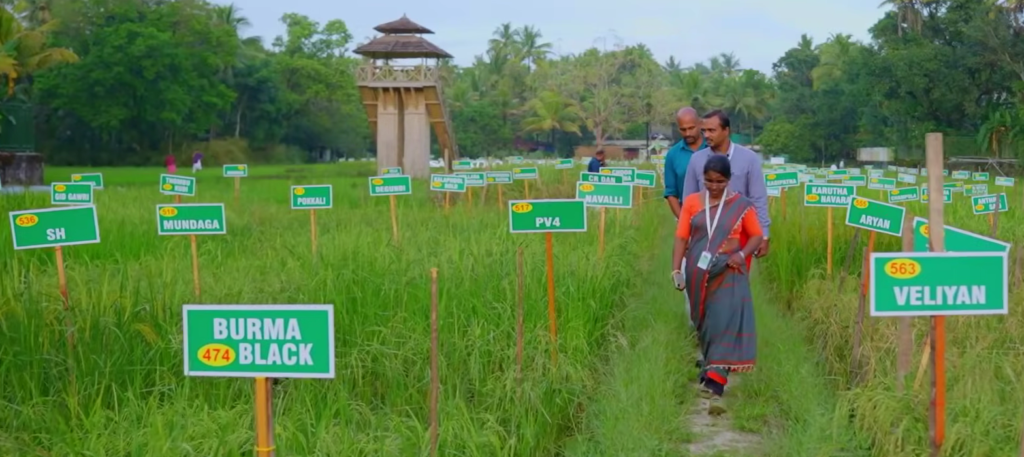
From the world’s smallest rice grain to varieties producing two grains of rice from a single paddy grain, Avanayanganatt Kalari’s unique farming initiative is preserving and promoting the rich diversity of traditional rice varieties.
THRISSUR: Peringottukara in Thrissur district is witnessing a remarkable agricultural experiment amid its lush green paddy fields. Around 570 different varieties of rice are being cultivated and conserved in the region by Avanayanganatt Kalari, turning the paddy field into a living repository of rice diversity.
The collection includes rare varieties ranging from one known for having one of the world’s smallest rice grains to a variety in which a single paddy grain produces two rice grains. There are also winged rice varieties, rice that reportedly turns into cooked rice when placed in plain water, black rice, aromatic rice and varieties specifically used to make aval (flattened rice), malar (puffed rice) and payasam.
The primary objective of the initiative is to identify rare and endangered rice varieties, revive them through cultivation and preserve their seeds for future generations.
One Paddy Field, Hundreds of Varieties
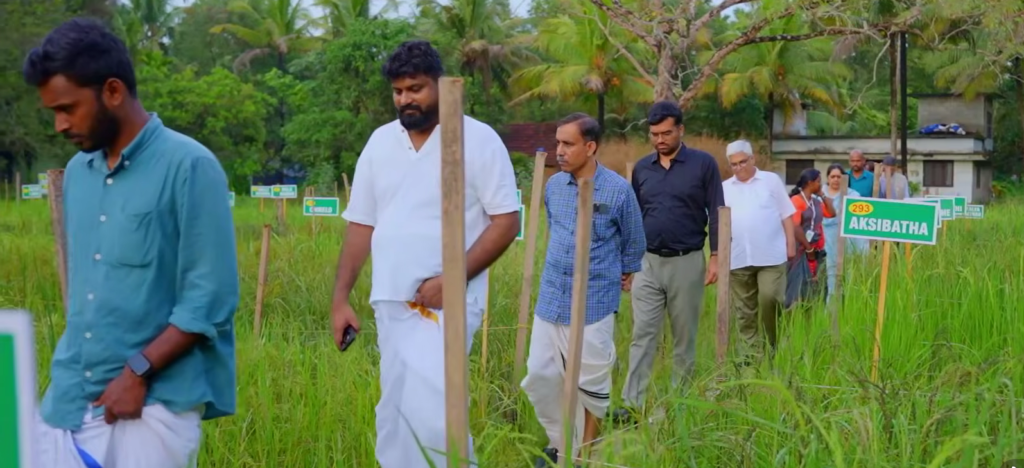
The conservation activities at Avanayanganatt Kalari are being carried out under the leadership of Linsey. According to her, the initiative focuses on conserving rare and diverse rice varieties collected from different parts of the world.
For the past five years, organic farming has been carried out across around 42 acres of the Peringottukara paddy fields. Along with paddy cultivation, vegetable farming was also introduced. As part of the diversity conservation programme, 127 different rice varieties were cultivated last year.
The varieties produced better-than-expected yields, encouraging around 20 farmers to collect seeds from the farm and use them for their subsequent cultivation. Seed exchange is also an important part of the initiative. Rare seeds available with other farmers are collected, while seeds of varieties conserved at Avanayanganatt Kalari are given in exchange.
In many ways, the practice functions as a traditional seed-barter system.
From 127 Varieties to 570
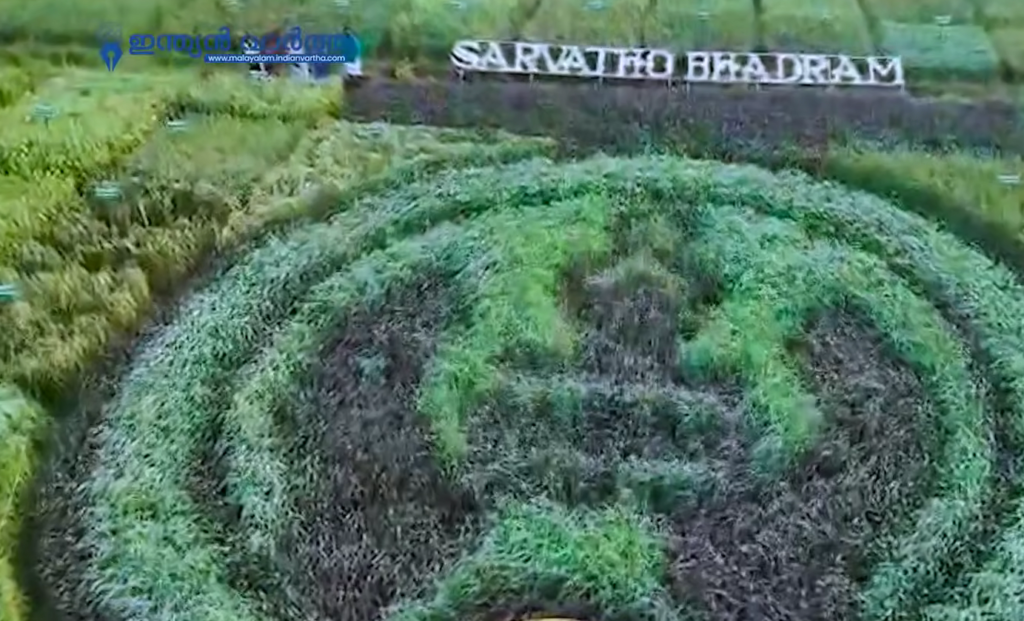
The target for this year was initially to cultivate 500 different rice varieties, building on the 127 varieties grown the previous year. However, once cultivation began, the number increased to around 570.
Many of these varieties have already been harvested.
A major share of the seeds used this year was supplied by Lineesh, who has been conserving and cultivating different rice varieties as part of a diversity plot in Wayanad for several years. Rare varieties obtained from different regions and countries were also added to the collection. Dr Sreeni is also supporting the conservation activities.
Some foreign rice varieties were brought to Peringottukara with the assistance of Lineesh. As a result, the paddy field at Avanayanganatt Kalari is more than an ordinary agricultural field—it functions as a living gene bank of rice varieties.
A Fascinating World of Rice Varieties
Each rice variety cultivated here has its own distinctive characteristics and story.
Tulasi Bog is being conserved as a variety known for its exceptionally small rice grain. Jugal, another unusual variety, is known for producing two rice grains from a single paddy grain.
The speciality of Kari Komal is that its rice reportedly turns into cooked rice when placed in plain water. Black rice and aromatic varieties are also cultivated here. Some varieties are used specifically for preparing aval, while others are traditionally used for making malar and payasam.
The name Kavungin Poothala itself reflects its distinctive appearance. The panicle resembles the flower cluster of an areca palm.
The collection also includes winged rice varieties, among them Nalipanka and Eruk.
One Variety in Every Cent
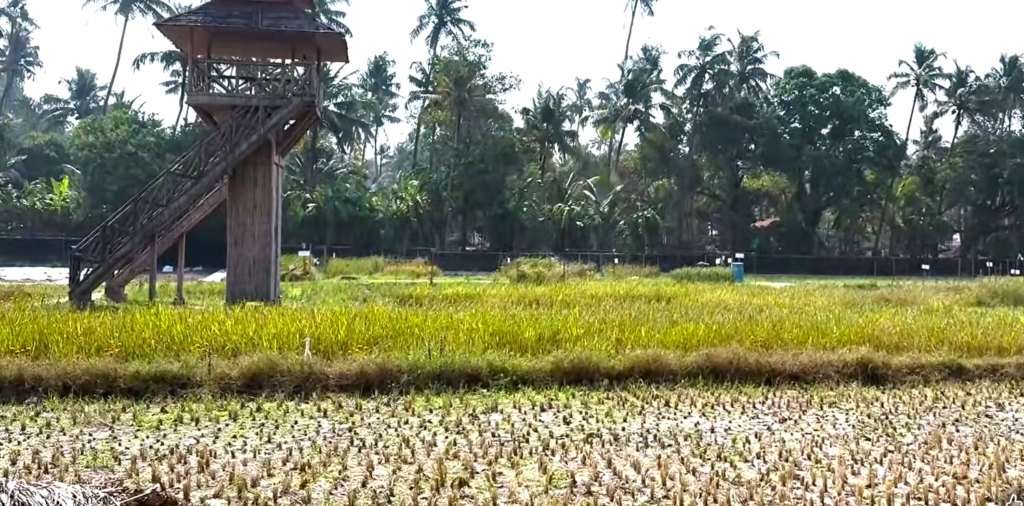
To maintain the purity of the seeds and ensure effective conservation, each rice variety is cultivated separately. At present, the fields are arranged on the principle of cultivating one variety in one cent of land.
Around five acres have been set aside for cultivating the different rice varieties in this manner.
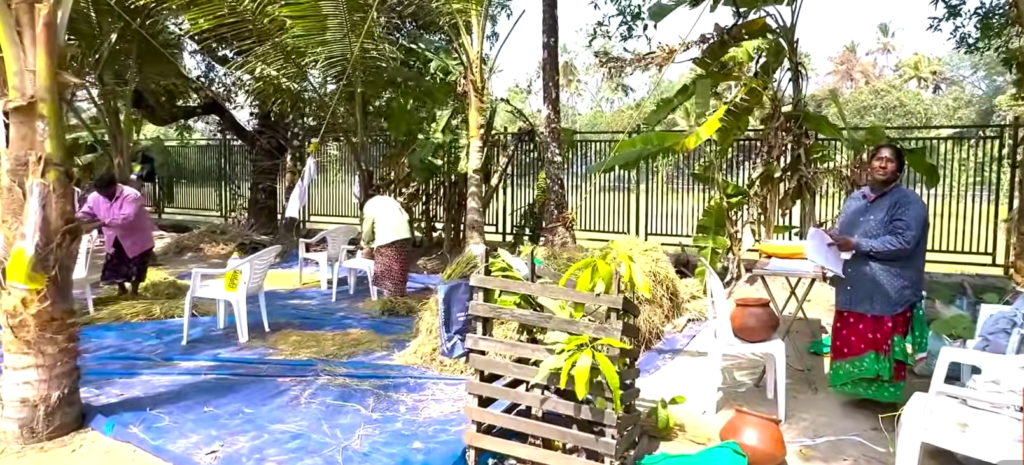
After harvesting, the seeds are carefully preserved and distributed to farmers and others interested in rice cultivation. This allows the conserved varieties to move beyond the farm and return to wider agricultural use.
The target for next year is even more ambitious: to cultivate 1,000 different rice varieties.
Diversity That Adapts to Different Climates
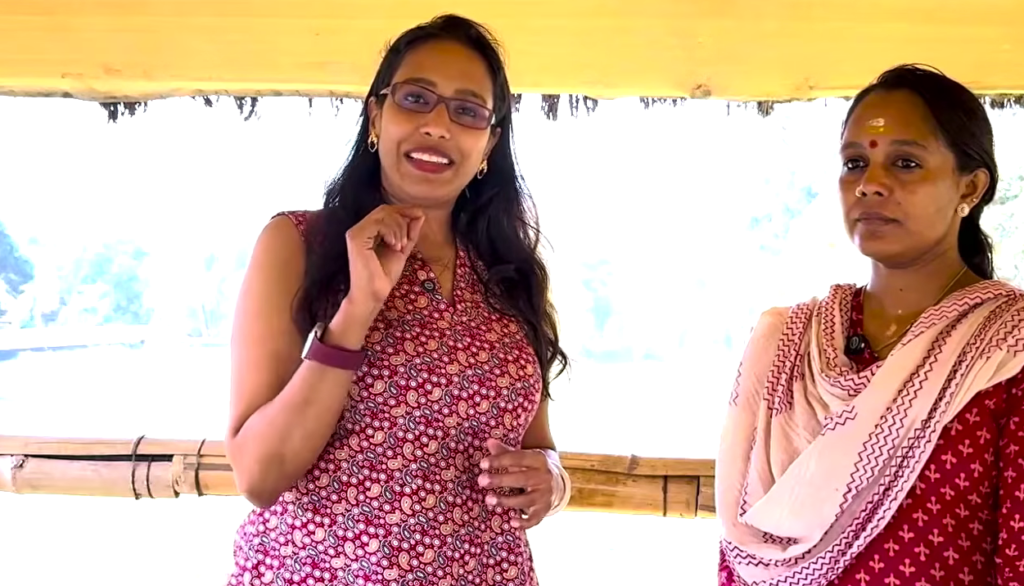
One of the major challenges in bringing seeds from different regions is determining whether they can adapt to the climatic conditions of a new location. The experience at Peringottukara, however, offers encouraging results.
Despite originating from different climatic regions, most of the varieties have adapted well to the local conditions. Some varieties produced good yields earlier than expected. Only one variety failed to produce the anticipated yield, while the remaining varieties recorded satisfactory results.
The collection includes several rare varieties such as Mathai Samba, Ekkarineṭṭ, Migerisala, Arimodan, Ambaladan, Kallunni, Aksibath, Burma Black, Veliyan, Mundakan, Thavalakkannan, S.H., P.V.4, Rasbog, Chungam, Kattamuttan, Kaima, Vellai Milagi and Tamil Nadu Variety, among many others.
A Conservation Mission Beyond Seeds
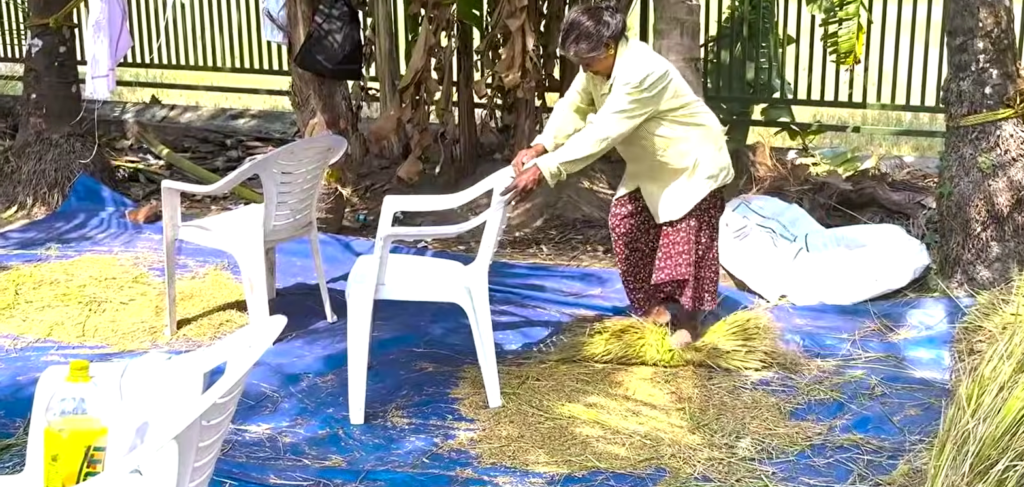
The initiative is not merely about increasing rice production. Its larger objective is to bring disappearing and forgotten varieties back into cultivation and promote their wider use.
When a rice variety disappears, what is lost is not just a seed. Along with it disappears a part of a region’s agricultural history, food culture, traditional farming knowledge and genetic capacity to adapt to changing climatic conditions.
The conservation of rare rice varieties is therefore closely connected to the future of food security.
As hundreds of rice varieties grow side by side in the fields of Avanayanganatt Kalari, each with its own distinctive characteristics, the fields tell a story that goes beyond agriculture and harvest. They offer a reminder that protecting crop diversity is essential for safeguarding the future of farming.
The journey from 570 varieties towards a target of 1,000 ultimately serves a larger purpose: bringing disappearing seeds back to the soil, placing them in the hands of farmers and preserving a living heritage of rice diversity for future generations.