Sweeping U.S. tariff hikes may have unsettled trade flows, but the India–U.S. partnership remains steady, anchored not in economics alone but in trust, resilience, and strategic alignment. Analysts stress that while tariffs sting, they cannot shake the deeper foundations of this relationship.
Washington’s decision to impose tariffs of up to 50% on Indian goods has put pressure on sectors like gems, jewelry, textiles, agriculture, and leather. Yet, of India’s $87.3 billion exports to the U.S. in 2024, only $48–55 billion fall under these new duties. Exporters responded quickly, with jewelry shipments up 16% and lab-grown diamonds surging 27.6% in July 2025.
Pharma remains a powerhouse, with Indian firms supplying nearly 40% of America’s generic drugs — an industry worth $50 billion. IT and services, valued at $387 billion, continue to flourish. Defense ties, energy collaboration in LNG and renewables, and joint space missions like NASA–ISRO remain untouched, proving that cooperation goes far beyond tariffs.
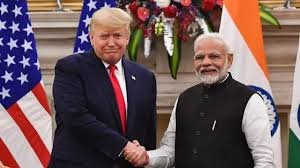
India–U.S. ties have overcome Cold War suspicions, sanctions, and earlier trade disputes. What sustains them today are shared democratic values, strong diaspora linkages, and thriving academic and business exchanges. Experts agree that the partnership is built on trust that outlasts temporary economic friction.
India is pushing for a bilateral trade deal with Washington by November 2025, even as defense cooperation and high-level exchanges stay firmly on track. Still, U.S. voices like Congressman Ro Khanna warn that steep tariffs could drive India closer to Russia and China, a risk analysts also highlight amid New Delhi’s recent warming ties with both.
While tariffs bruise select industries, the broader India–U.S. relationship continues to thrive. With deep strategic goals, economic resilience, and people-to-people ties, this partnership looks set to endure turbulence and steer toward long-term stability.