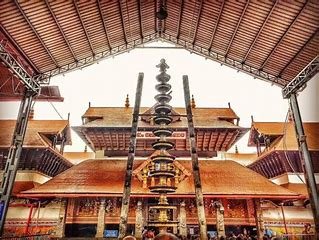
A government audit has revealed serious financial discrepancies and asset mismanagement at Kerala’s iconic Guruvayur Temple, managed by the Guruvayur Devaswom Board. The reports, covering the fiscal years 2019–20 and 2020–21, expose widespread lapses in financial discipline and transparency, raising questions about the administration’s handling of temple wealth and offerings.
According to the audit, there were major mismatches between the temple’s budgeted and actual figures for revenue, investments, donations, and expenditures. Shockingly, records show that expenditure exceeded income by nearly ₹25 crore in 2020–21, with spending reportedly three times higher than earnings that year. Even more concerning, decisions made by the board after July 2012 were excluded from audit scrutiny, following a 2015 directive stating such decisions “need not be submitted for audit.”
The report also highlights a lack of physical verification of valuable assets, including gold, silver, and other precious items, as required under the Guruvayur Devaswom Rules, 1980. Several high-value donations, such as a massive bronze vessel donated in 2002 worth around ₹15 lakh, were missing from registers. The audit further flagged unaccounted ivory stock—about 522 kg—from the temple’s famed elephant facility, which was not properly handed over to the Forest Department.
The revelations come amid heightened public scrutiny over temple management in Kerala, especially after the Sabarimala gold theft case. Political leaders have demanded a CAG-led central audit of all Devaswom Boards to ensure transparency. Meanwhile, Guruvayur Devaswom authorities claim that many of the irregularities date back to previous administrations and assert that financial controls have since been tightened.
Experts are calling for immediate verification of temple assets, digital accounting systems, and public disclosure of audit findings to restore devotees’ trust. The findings have sparked a statewide debate on the need for greater accountability and independent oversight in the management of Kerala’s temple wealth.