With 35 donkeys, Father Davis Chakkalakkal is building a unique farming model in Thrissur, with a goal of expanding to 100
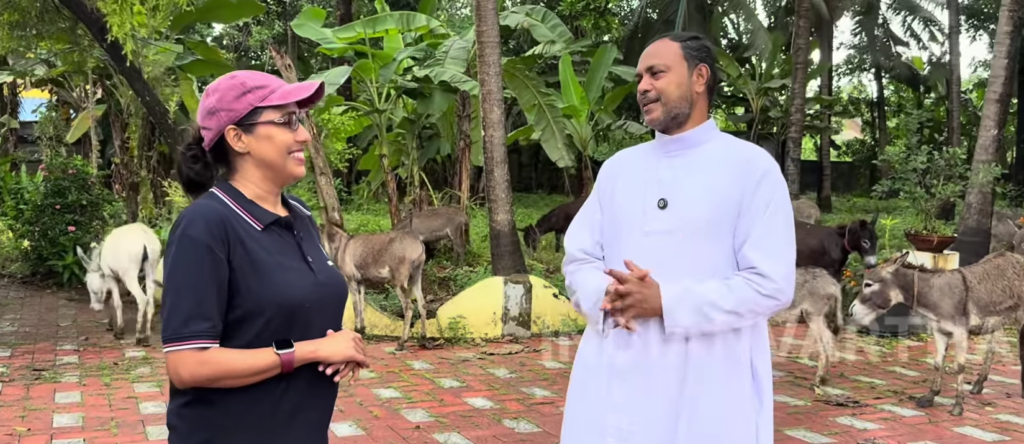
For generations, the donkey has often been portrayed in popular culture as a symbol of foolishness, neglect and ridicule. At Farm Park Thichoor in Kuttimukku, Thrissur, however, the animal has a completely different identity. Here, donkeys are not objects of mockery but an important part of a carefully managed livestock enterprise.
Father Davis Chakkalakkal is currently rearing 35 donkeys at the farm, exploring the potential of donkey milk, breeding and livestock management. His next goal is to expand the farm to 100 donkeys and develop it into a larger alternative livestock farming model in Kerala.
A journey that began with Palm Sunday
Father Davis’ association with donkeys began nearly a decade ago. It started with preparations for Palm Sunday, when a donkey was required for a ceremonial recreation of Jesus Christ’s entry into Jerusalem.
Finding a donkey at the time was not easy. Eventually, one was purchased from a church in Vellattanjoor, Thrissur. Two more donkeys were later brought to the farm, marking the beginning of what has now grown into a sizeable herd.
Today, the farm has 27 female donkeys and eight males. The herd grew further when Elsa, one of the female donkeys, gave birth on July 2. The newborn has been named Isa.
“Society often uses the word donkey in a negative sense. But the donkey is a very useful domesticated animal. The idea behind this farm is to encourage people to look at donkeys from a different perspective,” Father Davis says.
A place in faith and history
According to Father Davis, donkeys also have an important place in Christian tradition. They are associated with Jesus Christ’s journey and with the journey of Joseph and Mary.
References to donkeys being used for travel can also be found in the Old Testament.
For Father Davis, therefore, an animal that has been part of human life for centuries should not be reduced to a symbol of ridicule.
Giving preference to native breeds
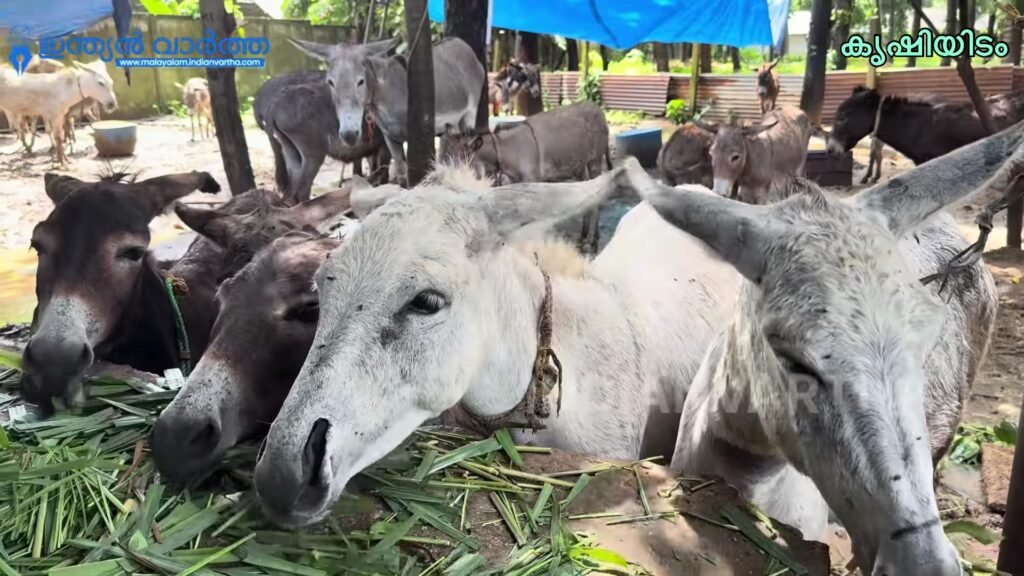
Farm Park Thichoor primarily rears native donkeys, along with two hybrid varieties.
One of the most striking animals at the farm is Prince, an approximately four-and-a-half-year-old donkey belonging to the Asiatic wild donkey type. Standing nearly five-and-a-half feet tall, Prince is considerably different in appearance from the other animals at the farm.
Of the 35 donkeys currently at the farm, nine female donkeys are producing milk.
Donkey milk and its market potential
The commercial potential of donkey milk is one of the factors attracting growing interest in donkey farming. Father Davis says donkey milk can fetch prices of up to Rs 7,000 per litre for certain industrial uses, depending on the market and product.
However, milk production per animal is much lower than that of a cow. Typically, after the young one has fed, around 350 ml of milk may be collected from a donkey. Milk is mainly collected in the morning.
Two donkeys at the farm, Maria and Susie, are notable for their higher production, yielding around 750 to 800 ml a day, according to Father Davis.
He believes greater awareness is needed in Kerala about donkey milk and its nutritional characteristics. However, claims about specific health benefits should be evaluated on the basis of scientific evidence and professional medical advice rather than anecdotal experience.
Grass forms the foundation of the diet
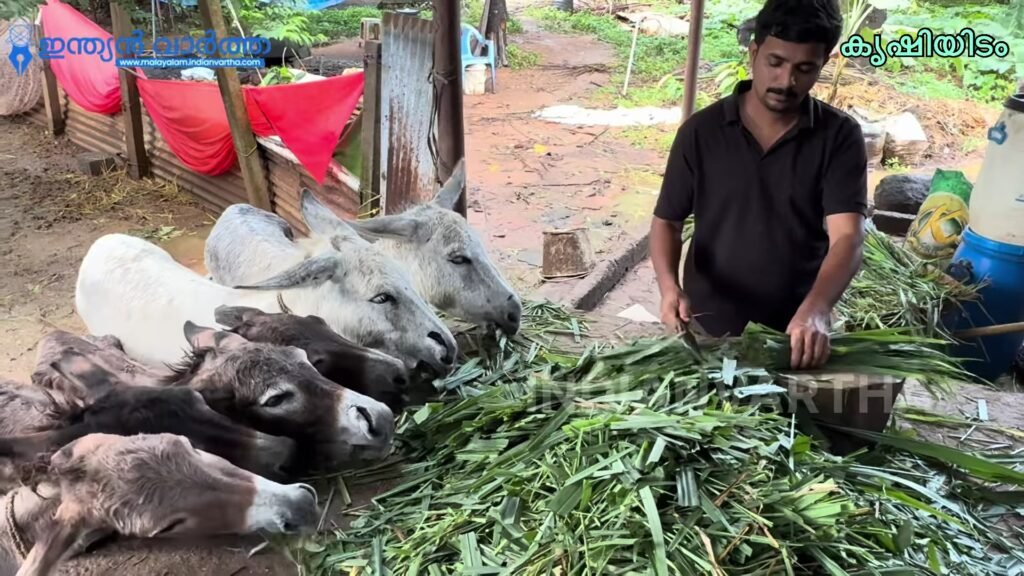
Feed management is an important part of donkey rearing at the farm. Grass forms the main component of the diet. Super Napier grass is provided three times a day, along with other varieties of fodder grass, including CO-3.
The grass is cut into smaller pieces before being fed to the animals. A mixture containing pulses and grains is also included in their diet.
Green gram, black gram, different varieties of chickpeas, green peas and horse gram are among the ingredients used. Around 10 kg of wheat and three to four kg of rice are cooked into a porridge and provided as supplementary feed.
Groundnut cake, coconut cake and wheat-based feed are also included. Vegetables such as beetroot and carrot are given as part of the diet, while eggshell powder and calcium supplements are used as calcium sources.
A gestation period of nearly 14 months
Donkey breeding also comes with its own unique characteristics. The gestation period is approximately 13 months and 20 days.
During the first three to four months of pregnancy, visible physical changes may be limited. As delivery approaches, the animal may become calmer and show changes in posture and behaviour, Father Davis says.
For the first month after birth, the foal depends primarily on its mother’s milk. Later, supplementary nutrition such as rice water and suitable feed is introduced. As they grow, the young donkeys gradually begin eating leaves and grass on their own.
Clean surroundings and grazing space are essential
A clean and secure shelter is essential for donkey farming. Equally important is adequate space for the animals to graze and move around freely.
At Farm Park Thichoor, the donkeys are taken out for grazing for around three hours a day.
Unlike cows, goats and dogs, donkeys may not immediately become accustomed to humans. However, Father Davis says they can gradually develop a bond with people when they are regularly handled, cared for and called by their individual names.
Not a low-maintenance enterprise
Father Davis says his experience has shown that donkeys generally have good resistance to minor illnesses and injuries. However, he stresses that donkey farming should not be viewed as an enterprise requiring little or no care.
Proper hygiene, balanced nutrition, adequate grazing space, vaccination, parasite control, hoof care and regular veterinary examinations are essential for maintaining a healthy herd.
Scope for government support
Father Davis also points to the possibility of government support for the development of donkey farms. He says there are central government schemes under which eligible livestock enterprises may receive financial assistance.
However, farmers planning to invest should verify the current eligibility criteria, subsidy limits and other conditions directly with the concerned Central and state government departments before making investment decisions.
A sector still in its early stages in Kerala
Although donkey farms operate in some parts of Kerala, including Kannur and Kochi, donkey rearing has not yet developed into a widespread livestock enterprise like dairy farming, goat rearing or poultry farming.
That presents both an opportunity and a challenge.
There is a market, but successful commercial farming requires careful planning. Before making a major investment based solely on donkey milk, farmers need to assess feed costs, veterinary expenses, breeding rates, milk production, market demand, storage requirements and other operational factors.
From fodder to milk: An integrated approach
Farm Park Thichoor goes beyond simply keeping donkeys. The farm focuses on several interconnected aspects of livestock management, including producing fodder, controlling feed costs, maintaining a structured diet, managing breeding and exploring the potential of milk production.
Friends help with cutting grass, while a worker assists with cleaning and other routine activities. The farm is being managed with limited manpower while gradually expanding its operations.
The next target: 100 donkeys
What began with a few animals has now grown into a herd of 35. Father Davis Chakkalakkal’s next ambition is to build a farm with 100 donkeys.
He hopes that the venture will encourage more people to look at donkey rearing as a viable alternative livestock activity in Kerala.
The story of Farm Park Thichoor carries a simple message for farmers willing to explore unconventional opportunities: sometimes, a new source of livelihood begins by looking at an overlooked animal from a completely different perspective.
In Thrissur, the donkey is no longer merely a figure of ridicule. At Farm Park Thichoor, it has become part of an experiment in alternative farming, entrepreneurship and rural livelihood.