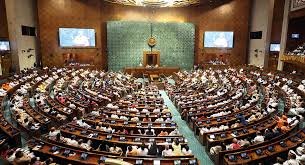
In a dramatic late-night session marked by heated exchanges and overnight protests, Parliament has passed the Viksit Bharat–Guarantee for Rozgar and Ajeevika Mission (Gramin) Bill, formally replacing the two-decade-old Mahatma Gandhi National Rural Employment Guarantee Act (MGNREGA).
The Bill was cleared by both the Lok Sabha and the Rajya Sabha within hours of each other, bringing an end to one of the most intense parliamentary debates of the session. Opposition parties staged prolonged sit-ins and walkouts, accusing the government of rushing through a major policy shift without adequate consultation.
The VB-G RAM G Act increases the annual guaranteed employment for rural households from 100 days to 125 days, a move the government says will strengthen livelihood security and boost rural infrastructure creation. The scheme is aligned with the Centre’s ‘Viksit Bharat 2047’ vision, focusing on employment-linked asset development and economic self-reliance in villages.
Defending the legislation, the government said the new law modernises rural job guarantees, improves efficiency, and expands opportunities beyond the framework established in 2005. Ministers argued that the reform reflects changing rural needs and aims to deliver better outcomes for workers.
Opposition parties strongly objected to replacing MGNREGA, calling it a landmark rights-based programme that provided a legal safety net to millions of rural families. They raised concerns over the renaming of the scheme, cost-sharing provisions for states, and what they described as an attempt to dilute guaranteed employment rights.
MGNREGA has long been considered one of India’s most significant social security laws, playing a crucial role in rural income support, especially during economic distress. Its replacement with the VB-G RAM G Act marks a major shift in India’s rural employment policy, with long-term implications for workers, states, and village economies.
As political reactions continue, attention now turns to how the new law will be implemented on the ground—and whether it can deliver on its promise of enhanced rural livelihood security.